From entry-level design work to leading substation programs, here’s what a career at a multidisciplinary utility engineering firm actually looks like.
Your Future in Power Engineering Starts Here
The energy and utility sector is evolving faster than ever – and so are the opportunities for engineers who want to make an impact. At DST Engineers, we don’t just design systems; we build careers. Whether you’re just starting out or bringing years of expertise to the table, our mission is simple: help you grow while shaping the future of power systems.
Utility and power engineering hiring is being driven by two forces at once: an aging grid workforce nearing retirement, and a surge of new work — grid modernization, distributed energy resource (DER) integration, and electric vehicle load growth — that requires more engineers, not fewer. For job seekers searching “power engineering jobs,” “electrical engineering careers,” or “utility industry careers,” the practical question isn’t whether the field is growing. It’s which employer will actually invest in you once you’re in the door.
Why Choose a Career in Power Systems?
From renewable integration to grid modernization, power systems work sits at the center of a global transformation. These roles aren’t just jobs – they’re a chance to contribute to sustainable energy solutions that directly impact communities.
For graduates, that means structured training, mentorship, and exposure to real-world projects from day one rather than a year of shadowing before touching real deliverables. For seasoned professionals, it means leadership pathways, technical specialization, and the chance to drive innovation across complex, multi-year programs.
- Entry-Level Engineering Positions: structured training, mentorship, and real-world project exposure for graduates
- Experienced Engineer Roles: leadership pathways, technical specialization, and ownership of complex projects for seasoned professionals
What Entry-Level Engineers Actually Work On
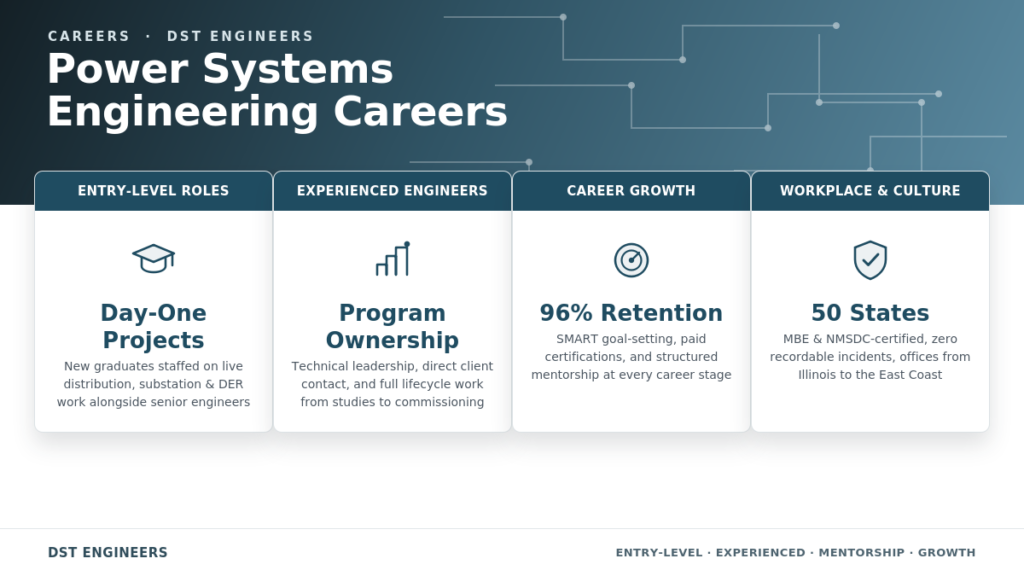
At DST Engineers, new graduates are staffed on live distribution, substation, and DER interconnection projects alongside senior staff – producing model files, device settings, and drawings that go into actual construction and commissioning packages, not internal training exercises.
- Distribution and substation design support
- DER and solar interconnection studies
- Protection and coordination study assistance
- Field data collection and asset verification
What Experienced Engineers Get That They Might Not Elsewhere
For engineers past the first few years, the calculus changes: it’s less about learning the basics and more about whether a firm will let you own a program instead of just executing tasks. DST’s structure gives experienced engineers technical leadership on specific utility accounts, direct client contact, and a path toward managing the full lifecycle of a program — from studies through commissioning – rather than staying boxed into one phase of work indefinitely.
Career Growth at DST Engineers
We believe careers should evolve just as much as technology does. That’s why we’ve built a workplace where engineers are supported through every stage of their journey, on a few concrete mechanisms rather than open-ended promises:
- Clear Career Pathways: structured development programs and SMART goal-setting ensure you always know your next step
- Skill Development: company-paid certifications and a full library of technical resources to invest in your growth
- Mentorship & Collaboration: open communication, project collaboration, and mentorship programs that help you thrive
- Recognition & Retention: we celebrate achievements, support work-life balance, and maintain a 96% retention rate – well above the industry norm
The DST Difference: A Workplace That Feels Like Home
Joining DST Engineers isn’t just about the projects — it’s about becoming part of a community. From team outings and company lunches to recognition programs and community service, our culture fosters belonging and connection. When you feel valued, you don’t just work – you innovate, grow, and stay inspired. That’s why a career here offers more than a paycheck – it offers a sense of purpose, growth, and security.
DST Engineers is a certified Minority Business Enterprise (MBE) and an active NMSDC member, licensed to practice in all 50 U.S. states, with a home base in Illinois and regional offices in Maine, New York, and Delaware. That footprint matters for career mobility – it means opportunities aren’t limited to a single office or a single utility client. Our safety culture, built on zero recordable incidents, and our track record of community investment round out a workplace built for the long term, not just the next project deadline.
Ready to Take the Next Step?
Your future in power engineering starts with one decision: choosing a workplace that invests in you. At DST Engineers, we’re more than an engineering firm – we’re a launchpad for your success. Explore entry-level and experienced roles with DST Engineers.
Stay inspired. Stay connected. Stay DST.
Frequently Asked Questions
What qualifications do I need for an entry-level power engineering job?
Most firms, including DST Engineers, require a bachelor’s degree in electrical engineering or a closely related field. An EIT (Engineer-in-Training) certification or FE exam pass is a plus but isn’t always required on day one — it’s often something you complete in your first year or two on the job.
How long does it typically take to make Professional Engineer (PE)?
In the U.S., PE licensure generally requires four years of qualifying engineering experience after passing the FE exam, followed by passing the PE exam. Firms that offer structured mentorship and exam prep, rather than leaving candidates to study alone, tend to shorten the practical timeline.
Is utility engineering a stable career path?
Yes — utility and power systems engineering is considered one of the more recession-resistant engineering disciplines, since grid maintenance, modernization, and reliability work continue regardless of broader economic cycles, and much of the current workforce is approaching retirement, keeping demand for new engineers high.