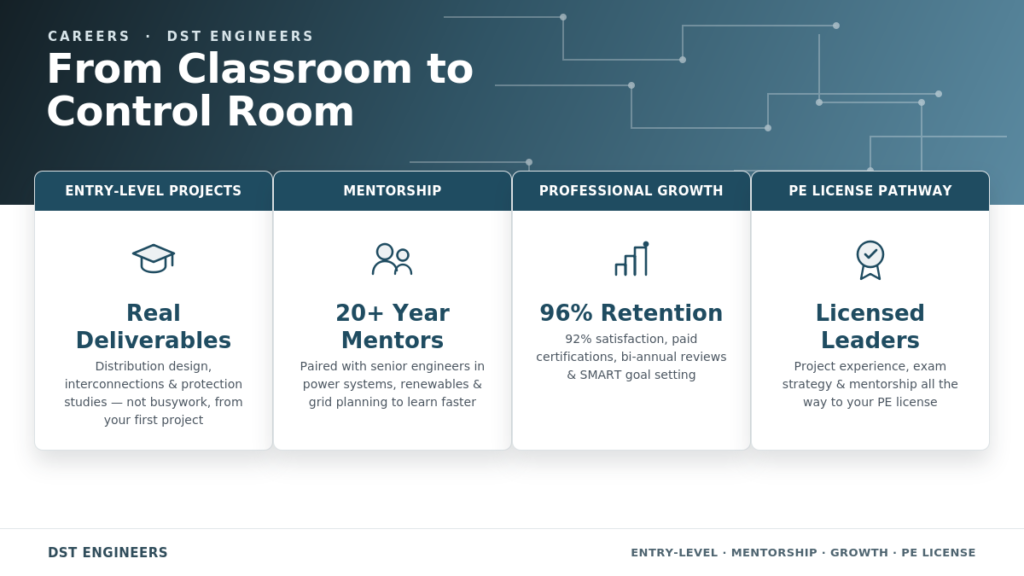
Graduating with an EE degree is the easy part. Here’s what actually closes the gap between coursework and a real utility project.
The Gap Between the Classroom and the Control Room
Graduating with an electrical engineering degree is just the beginning. The real question is, how do you go from solving equations in the classroom to solving real-world challenges in the control room? At DST Engineers, we make that leap possible.
We don’t just offer jobs — we offer careers built on mentorship, professional growth, and opportunities to impact the future of energy. Whether you’re drawn to renewable integration, grid modernization, or power system design, DST is where that interest turns into real project work.
Why Start Your Career at DST?
As a full-service engineering consulting firm with PE licenses in all 50 U.S. states, DST Engineers works on projects that keep the lights on for millions of people. From substation automation to distributed energy resource integration, you’ll be part of projects that matter.
But here’s what sets us apart: we’re committed to growing engineers, not just hiring them.
Entry-Level Engineering Roles: Real Projects, Real Impact
Forget busywork. At DST, entry-level engineers dive into projects such as:
- Designing smarter power distribution systems
- Supporting renewable energy interconnections
- Contributing to protection and coordination studies
You’ll see your classroom knowledge come alive on projects that drive the future of utilities.
Mentorship that Fuels Growth
Starting out can be intimidating, but you won’t be alone. DST pairs new engineers with seasoned experts who have 20+ years of experience in power systems, renewables, and grid planning.
Our mentorship programs are designed to help you learn faster, avoid rookie mistakes, and build confidence. At DST, we believe that engineers learn best from other engineers.
Professional Development: Beyond the Job
Your career is more than today’s project. That’s why DST invests in your growth with:
- Company-paid training & certifications (including PE prep)
- Bi-annual reviews and SMART goal setting so your career path is clear
- Opportunities to lead projects as your skills advance
With a 92% employee satisfaction rate and a 96% retention rate, it’s clear – our engineers don’t just stay, they thrive.
The Road to Your PE License
Becoming a Professional Engineer (PE) is a career-defining milestone. At DST, you’ll gain the project experience and mentorship to get there. Our senior engineers will guide you through technical challenges, share their exam strategies, and celebrate with you when you earn your license.
It’s not just about a credential; it’s about becoming a trusted leader in the field.
Why Engineering Students Choose DST
Joining DST means more than landing a job. It means:
- Working on cutting-edge energy projects
- Learning from mentors who are industry leaders
- Following a clear pathway to your PE license
- Growing in a workplace that values innovation and diversity
At DST Engineers, your growth is our mission. Because the best solutions come from engineers who feel supported, challenged, and inspired.
Conclusion
If you’re an engineering student ready to launch your career, DST Engineers is your bridge from classroom theory to industry impact. The energy sector is evolving fast, and you can be part of the team building what’s next.
Your career starts here. Are you ready to step into the control room?
Frequently Asked Questions
What does an entry-level electrical engineer do at a utility engineering firm?
Entry-level engineers typically support distribution and substation design, interconnection studies, and protection/coordination work under the guidance of senior staff – producing real deliverables (settings files, drawings, model runs) that feed into active projects, not standalone training exercises.
Do I need experience before applying to an entry-level power engineering role?
Internships, co-ops, or relevant coursework help, but most firms hiring entry-level power engineers expect to train new graduates on-the-job; a completed EE degree and strong fundamentals typically matter more than prior utility-specific experience.
How does mentorship affect how fast a new engineer progresses?
Structured mentorship – pairing new engineers with senior staff and reviewing progress on a set cadence – generally compresses the time it takes to work independently and reduces early-career mistakes, compared to learning purely through trial and error on unsupervised assignments.